I want to talk about my feelings on two rather personal topics: Rozen Maiden and my experience with CSA (incest mostly), or more specifically, the years of aftereffects rather than the acts themselves. I can only really speak for my experience and I am not interested in making widespread generalizations or scientific hypotheses as much as I am interested in journaling my own feelings through art I love a lot and a fictional language of characters which I am very attached to. I do however think there is a reason for the affinity I have to Rozen Maiden and I think a lot of it relates to feelings that I tend to think are related to intimate trauma and abuse. I also want to put a small preamble: I'm not big on the language which depicts victims of CSA as survivors. Yes they are alive, but there is no need to make such a horrible thing some kind of medal of honor or some challenge to overcome. Victims need less social expectations, more accommodation, and care of the kind that uniquely addresses their being victimized. That is not easy to do in our completely hellscape world so I don't blame victims for thinking of themselves as survivors but I personally just see myself as someone who was wounded very badly by something.
As a foreword: there are no explicit mentions of CSA in Rozen Maiden, and in many senses I think it is for the best. The explicit act of CSA is not really, in my opinion, something that usually depicts the thoroughgoing, longlasting damage done to the victim. The thing about victimization is that it leaves wounds for a lifetime and the events themselves are obviously important in that causation but also are used often for shock value without really addressing the consequences on victims. It just makes my skin crawl usually whenever a young child is victimized in media in that way, usually without any kind of effective aftercare from the series itself or the people I am witnessing the thing with to make me feel better. It's not that I blame other people as a general rule, but it's very difficult to ask for help when you feel that way, especially when being touched will just make you feel weird and distant: touch is the first avenue of support for most people.
For the organization of this, I was thinking a gallery with my commentary or thoughts on each image. I really process a lot in terms of small visual stuff and I like visual media a lot for that reason.
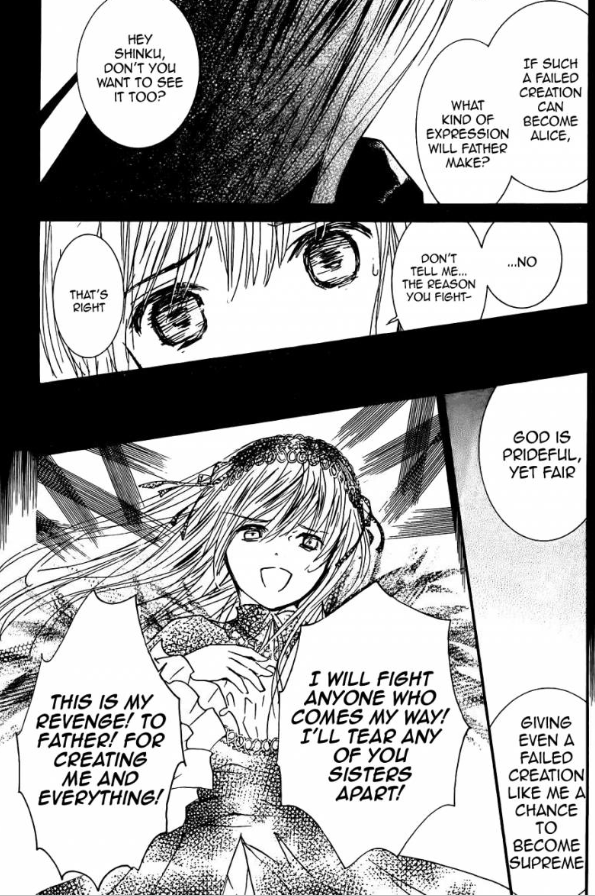
Suigintou is the elephant in the room for me insofar as elements of intimate abuse go in the manga, for me at least. I think there is something distinctly victim coded about her depiction in the manga that does not really make it through anywhere else. I think the set of panels I'm about to go through are a good introduction to the traces of victimhood I often feel are apparent in her character. Suigintou sees herself as a failed creation, abandoned by her father for her insufficiency, and views her body as defunct or broken, like a misshapen thing on some level despite her strong facade. She does not really, at the time the image depicts, view herself as worthy of being loved, but rather resents the bitter circumstances of her creation and thinks of her winning the Alice game as one final bitter wound she can inflict upon not just her father, but God: she hates the circumstances of her existence, not just her father for abandoning her. I think the elements of having a broken and damaged body and being a "failed creation" are very victim coded on their own, but the thing to me that always makes me think she depicts the complexes of a victim well are her affects: she is over-aroused oftentimes, and when she is not, she is bitter, cynical, withdrawn, and cold. She only steps outside of her shell to rain on a parade, insult someone, and so on. Her over-arousal is very complicated. She is prone to outbursts and generally has very poor emotional control, but it often manifests in antisocial and confused or dissociated manners. Despite the fact that she is really degrading herself and talking about how much she despises her father and God and how much she wishes to spite them, she is very aroused and excited. It's a typical situation for her and I think emblematic of a victim's dysregulated and disturbed nervous system.
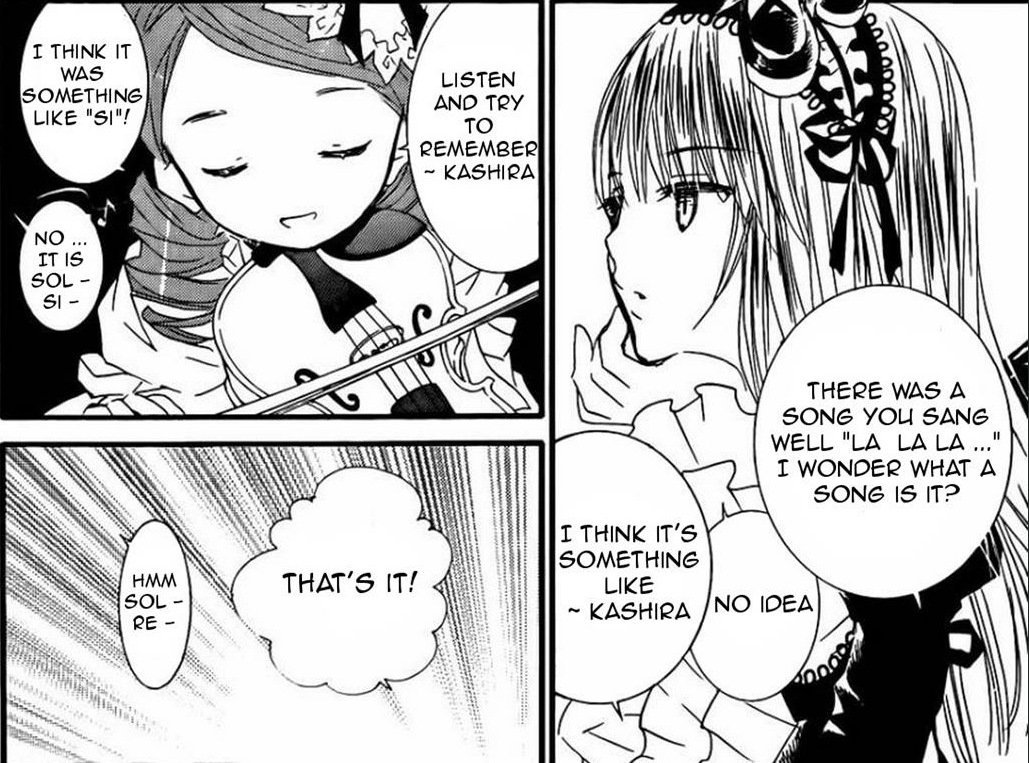
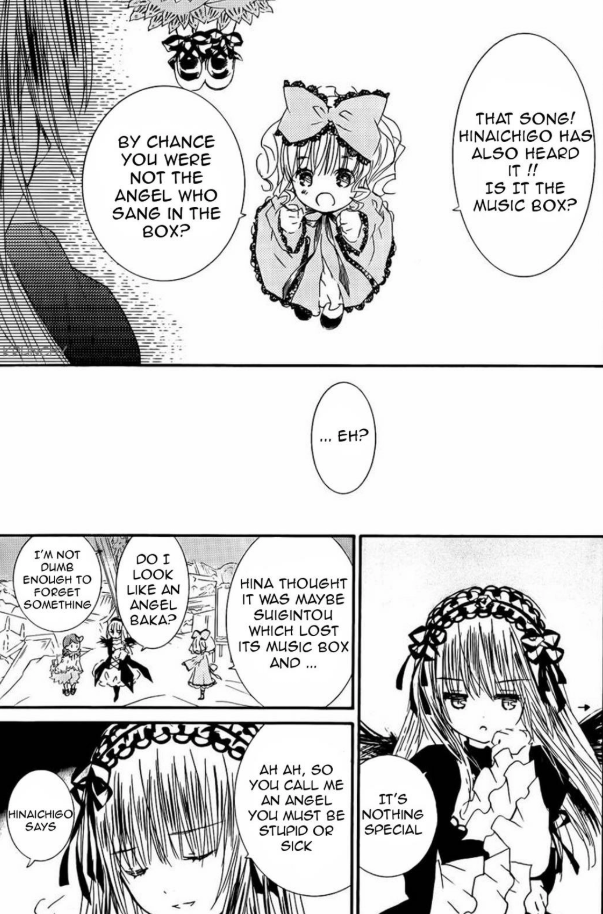
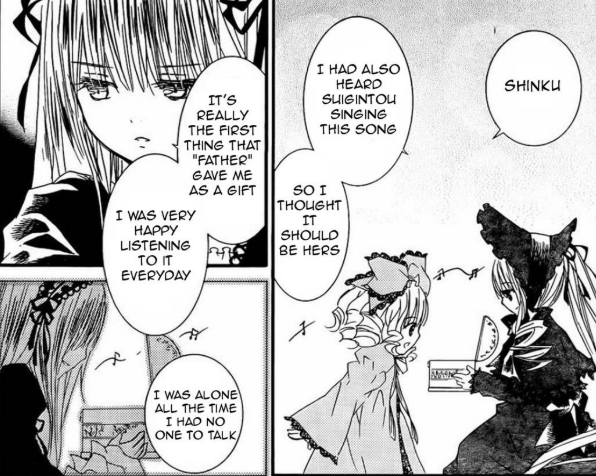
Suigintou treasured her first gift from father for an indeterminately long time. She was completely alone, abandoned by father quite promptly to receive less and less visiting time. I think the way that it was obviously a treasured gift which she later insisted upon the nonworth, meaninglessness of, one which she insisted initially that she did not even remember, is very typical of the kind of disassociative numbing and "amnesia" common to victims. To me, and it may be an audacious interpretation, the music box represents her unmolested love for her father. She loved her father in an uncomplicated manner, treasuring his gift and playing it every day. It did not merely lose novelty. Suigintou rejects even remembering it and she says she lost enjoyment of it when she saw how many other sisters her father felt it necessary to create to "replace" her. Her bodily trauma and view of herself as inferior and broken goes hand in hand with her inability to enjoy the music box. So I think of the music box as a lot like how a child may feel towards their caregiver before the abuse. It is an extremely, horribly, soul crushingly painful thing to remember the kind of uncomplicated love or attachment you may have had towards a caregiver before the really awful things ensued. It's one of the most nauseating things to think about and immediately makes my head feel foggy. I feel similarly about many "tainted" aspects of childhood e.g. I can remember what it felt like to enjoy touch in ways I no longer can. It is very painful. But the panel where she denies remembering her music box's song at all, isn't that very close to the heart? I know I "lie" about such things a lot. I talk about close things like they are far away and prefer not to remember them. Close objects make me tear up and feel sick if I think about them too much.
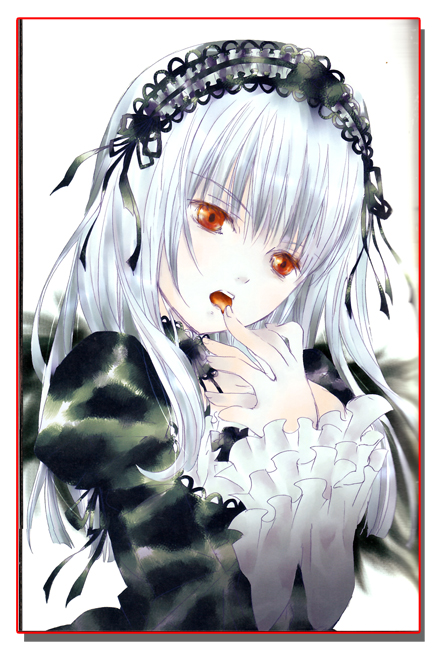
I like this image a lot. If I'm not mistaken it's official art, but I can't find the source right now. I'll come back and find it later. That being the case, this is definitely a "manga" suigintou. The 2000s anime series gave her purple eyes and a distinctly different design and the 2010s one just has a very distinct look. This image to me is interesting because of the vampiric and 'seductive' elements. By the seductive element I mean the exposed tongue, the idle gaze. It is a very confused child, that is the most distinct thing to me about the image: it's a depiction of a very confused and wounded child. She puts her fingers up to her tongue, which can be seen as "presenting" behavior, like showing her lips or tongue in a playful or seductive manner, but in my opinion it's equally as much just a self soothing behavior, like a more sublimated form of thumb-sucking for infants. Her gaze is angry. She does not really know how to affect or present. One could interpret the image as vampiric and consumptive: she is intent on killing and consumption (of life force, in the manga). But I tend to think the anger is really an apt depiction of her frustration in response to the confusion she is facing. Many victims of intimate abuse, myself included, have periods of self destructive or unhealthy seductivity later in their life, e.g. looking for inappropriate intimacy in adolescence (with adults) or being hypersexual in general or very "sexual" personalities. I know I have dealt with all of those things. I think most of all in this image, it's just a lot of confusion and displacement. Sexuality often becomes a defense mechanism or a tool for soothing and controlling relationships that feel dangerous for me, and the image always evokes that to me. I really have unmet needs, I am unconsciously soothing myself and trying to take care of myself (the "infantile" intepretation of the tongue-touching), but I am forced to present myself as seductive for you, to keep myself safe. It is partly the rage of neglect which is always present when exploiting a child.
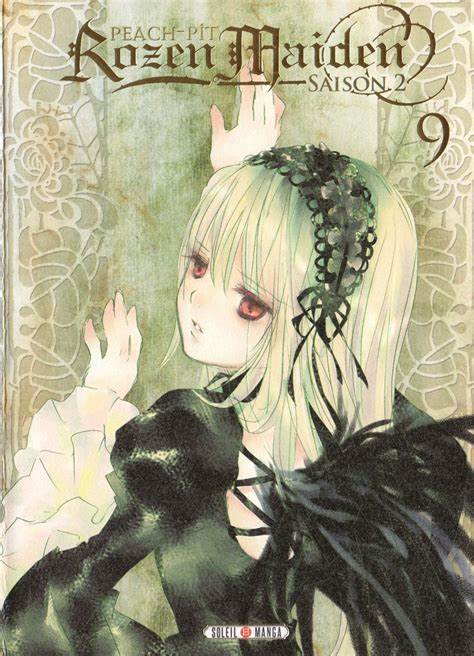
This is official manga art. This is another "seductive" image: it's not dissimilar to the kind of shot damsels in distress would do in 20th century American films. Whereas the last image depicts rage, confusion, and signs of neglect, to me, this image is very much so about exhaustion and disgust. She is exhausted, that is one of her defining traits to me. Beneath her bravado, excitable and aroused affect, and hate, she is exhausted. In the image she is trying to look behind her, her arms stuck against the wall, like she is trapped and trying to escape, but her gaze is flat and limp, almost cross eyed: out of focus. The disassociative, thoughtless haze which falls over her is to me a sign of victimization. She is trapped and she knows that there is nothing really to do about it, so she goes blank, limp and placid. I love seeing that feeling captured. The disturbed body language here is one of my favorite parts of Rozen Maiden. Rape and sexual assault are an implicit promise in many classic cinematographic depictions of women. In horror films the victim is often depicted in rape-like circumstances, but she reacts in an exaggerated, over the top manner. She shouts, pleads, kicks, and fights for her survival. That is not unrealistic. But if you are a chronic victim of sexual abuse at the hands of someone who both you depend on for essentially everything, and bearing in mind that the person in question is much, much stronger than you, someone you essentially can't stand up to and who has complete social authority over you, then there is nothing left after a certain point but exhaustion and relinquishment of the body as a locus of existence. I want to compare some imagery from the poster below to the imagery in the Rozen Maiden art.
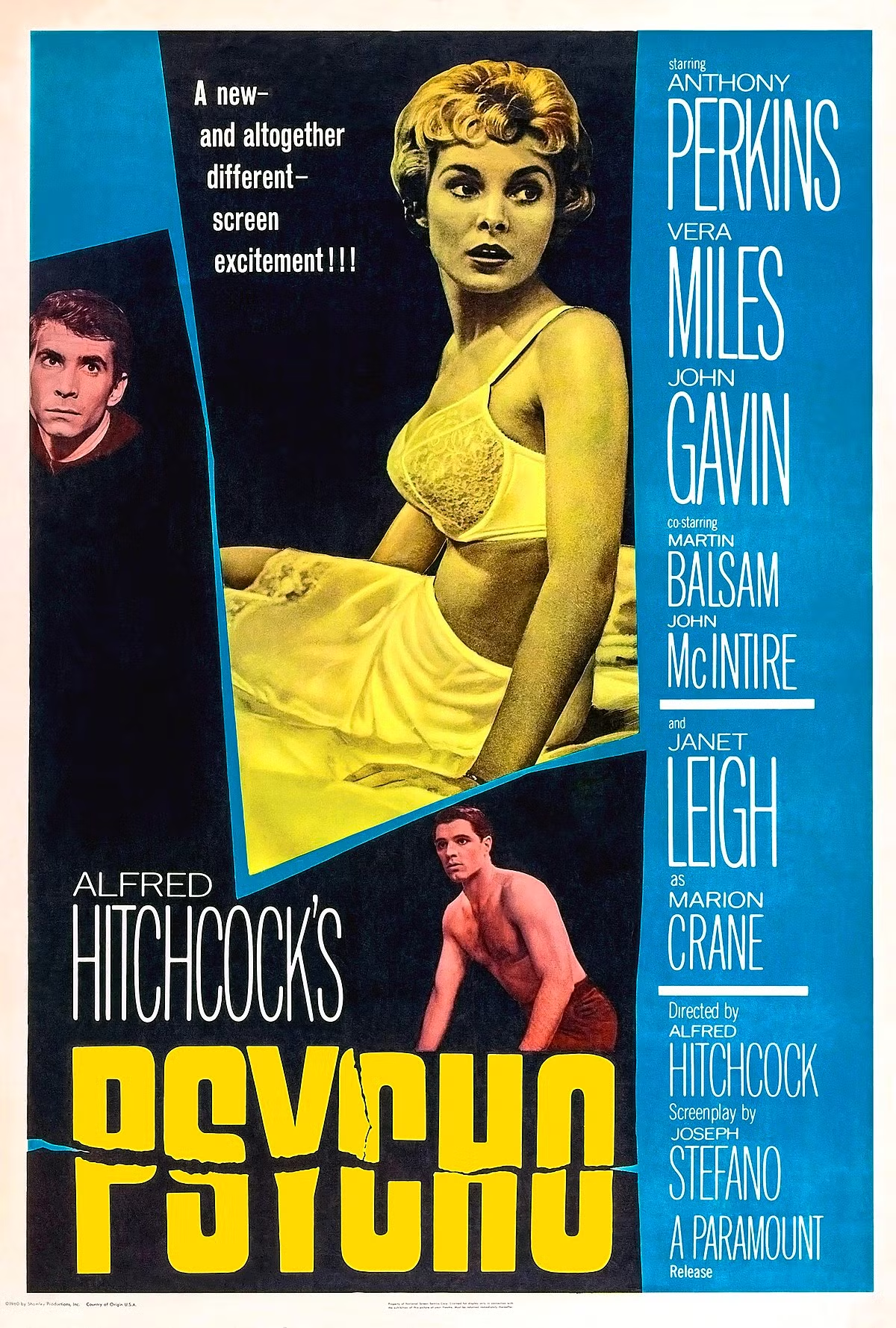
So the big thing I want you to note is that the victim is alert, unaware, and in an all around normal state in the poster, as if she were not being observed. I think in the Rozen Maiden art on the other hand, Suigintou is aware of or engaged with the gaze placed on her. I think that is in many ways a very important reversion of the subject-object dynamic placed on victims. Beyond that, her exhaustion is depicted. Exhaustion is a form of gaze: exhaustion and disassociation in a victim is a pre-emptive response to violence. It can only be born of experience, prediction, and proactive perception of what is going to occur. In my opinion much of the distinction between art which in my opinion speaks to the experience of a victim and that which merely fetishizes victimization is about depicting the cynical truths victims understand. They are not surprised by the violence which occurs to them when it is chronic, although it often rattles and disturbs one to the point of outlandish and disrupted coping mechanisms. I think part of the severe damage is knowing that you can never return to the prior state, before your emotional syntax was molested to the extent that a lot of your coping mechanisms look like excited catatonia, before your sense of danger became so pessimistic and you expected to have every basic bit of autonomy and selfhood you could imagine taken away from you and violated.
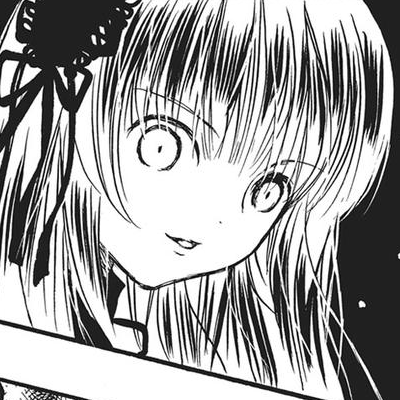
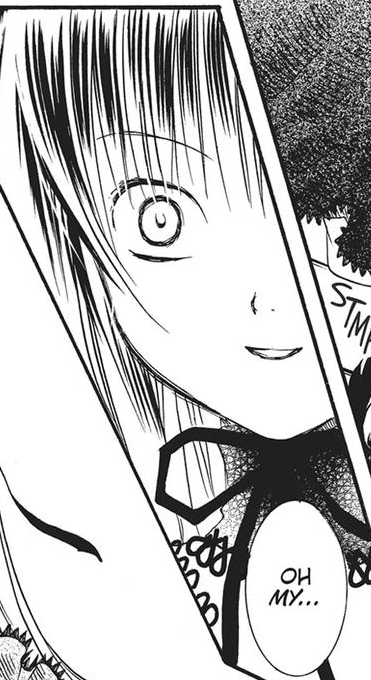
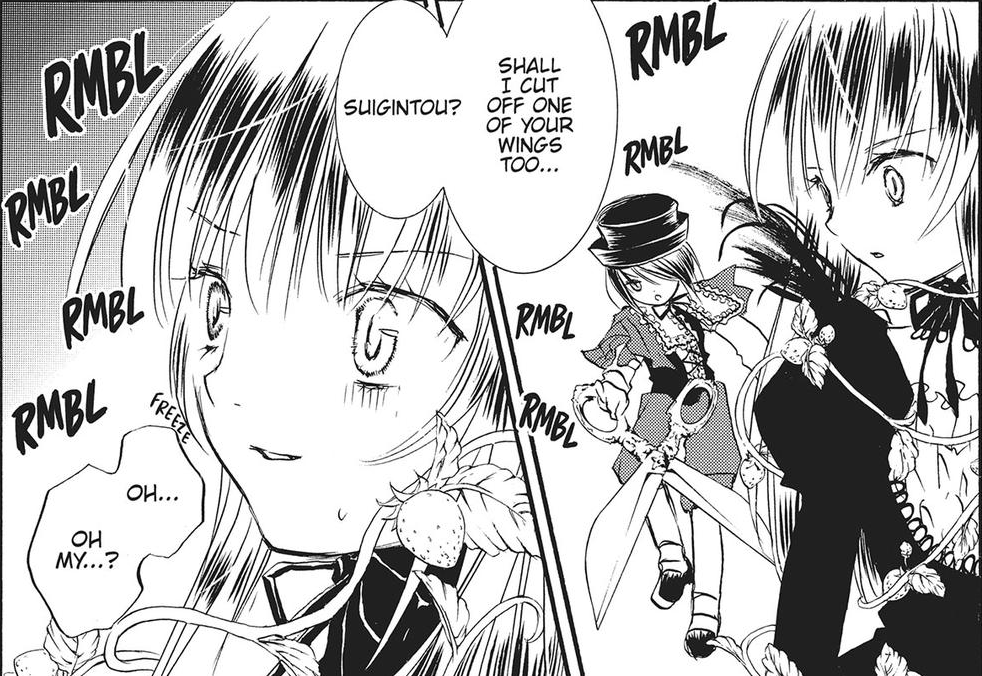
The disassociated and active affective state of a trauma victim to me is here... her eyes are very alert, her sadistic and violent tendencies are running contrary to her bright and smiling, if uncanny, affect... inappropriate affect. To me in this art in RM1 she is very much so actively quite disassociated and in the activated, stimulated, "sexual" state, rather than the dead, anesthetic "schizoidal" state. I think this state occurs due to the entanglement of "arousal" (as in activated, threatened, stimulated), affective confusion due to severe disassociation, and regression to a violated or traumatized activated state.
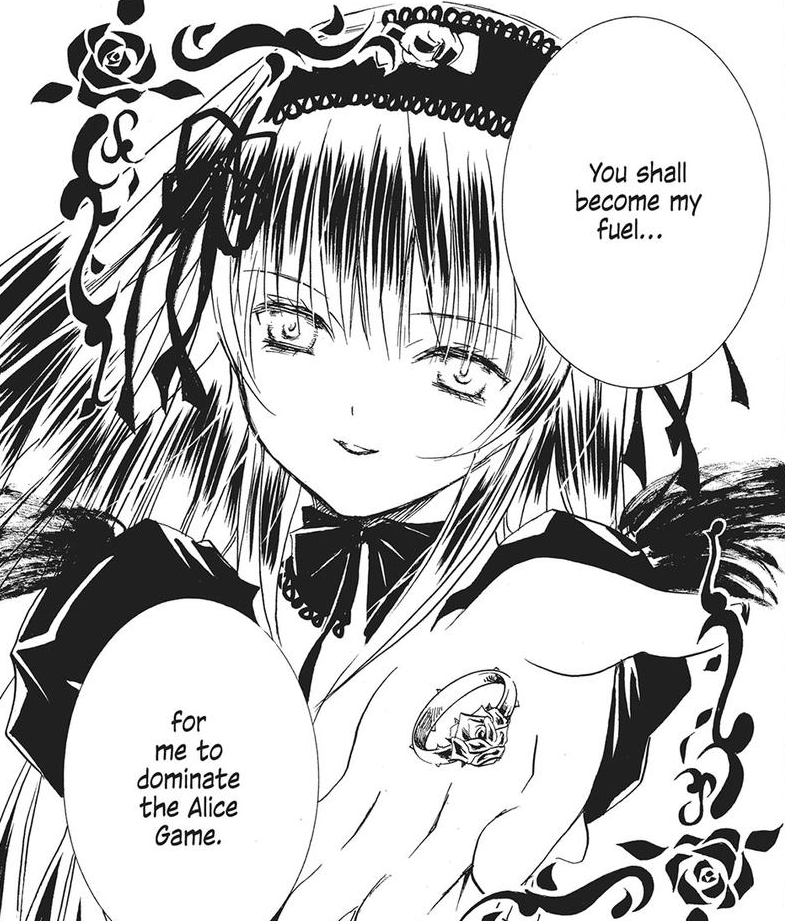
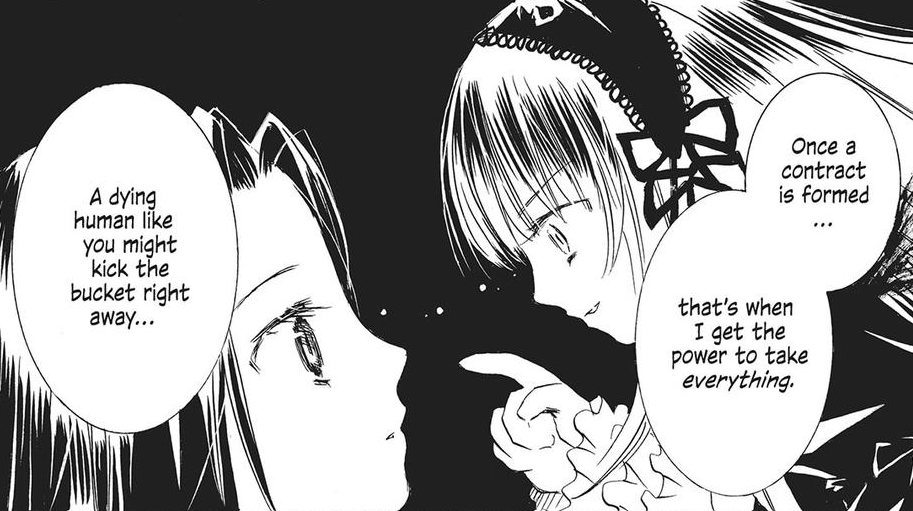
In my opinion this is distinct from an aroused state and moreso an artificial state, a false self or presentation she makes in order to coerce others or assert herself. It could be called "seductive" but it is more composed than e.g. the seductive fawn state. I have noticed also this highly "vampiric" model of relation in CSA victims: many people have talked about the analogy between vampirism and sexual assault, but I think it's important to remember that incestuous abuse is not just abuse but also education, just a very bad education. So a "vampiric" child is taught that the way relations work is that once you have the sufficient means to do so, you "take everything" that you can from someone. If we think of mediums in Rozen Maiden as analogues for parental figures from which the dolls draw their basic ability to live, then Suigintou's highly malicious and transactional point of view suits the inversion a victim of incestuous abuse might perform, where they can be on the "master" side of the master slave relation between medium and doll.
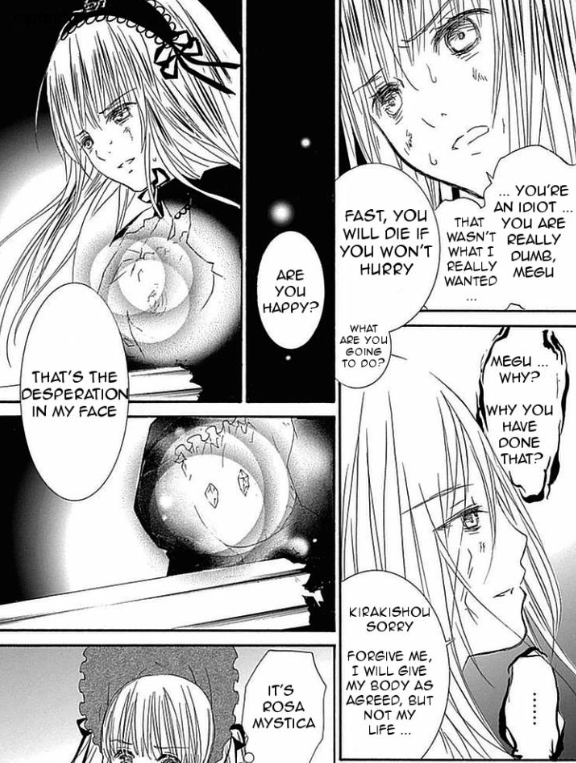
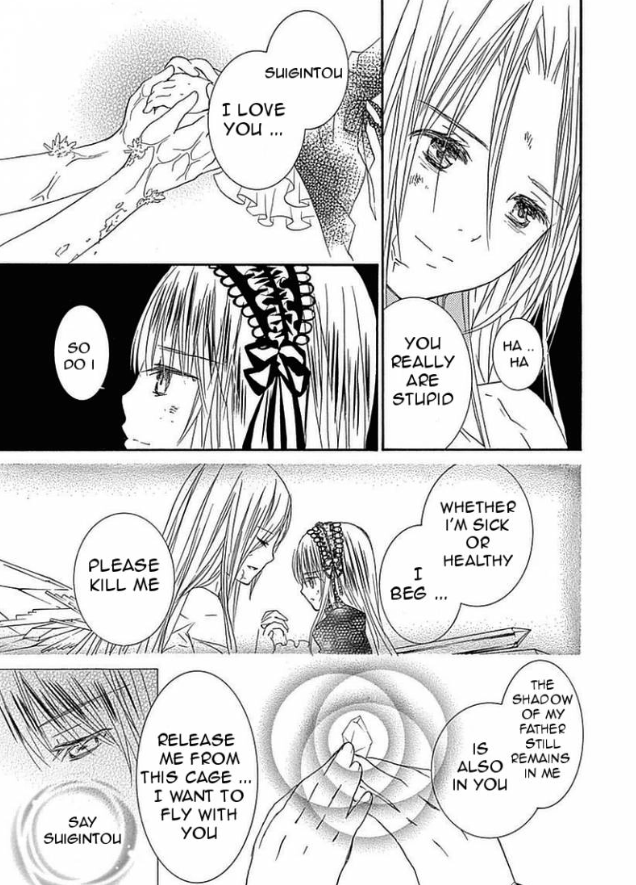
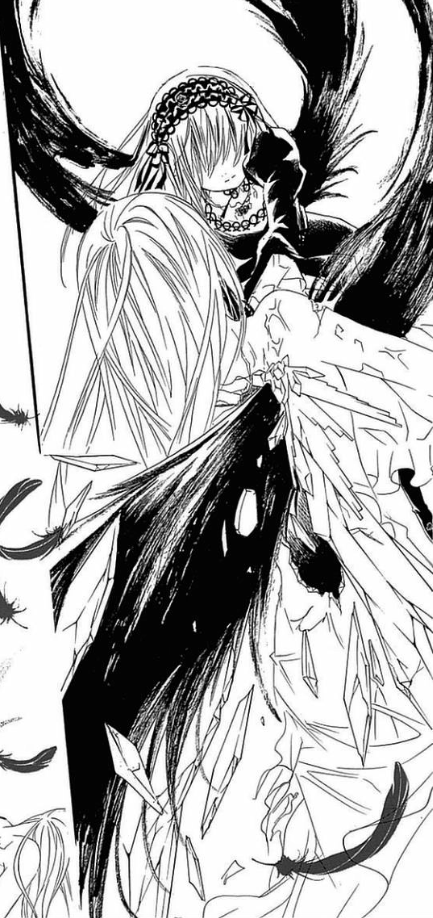
I'm not going to try and pretend the sequence above doesn't make me sick to my stomach. Suigintou falls in love with Megu, another girl abandoned by her father. Megu claims that Suigintou took too long to seize her life, hence her being taken away with Kirakishou. Suigintou of course grew to love Megu and wanted her to live. She is repaid with the realization that the only thing she can do to the sick person she has grown attached to, is to well and truly kill her. I feel miserable about that. I think it is very sad. It makes one tend to think love is a painful poison. It makes one really think that the two possibilities for the external world are wounding or poison, imposition or contamination. That it really all should be cleaned away and cut away. I don't know what to think of that, but the killing is cathartic. Kill the thing and just get away from it, that will be the right thing to do when it is like that. I feel bad for the girl a lot to be drawn into loving once more and then to be betrayed in that way. I can't help but feel that betrayal is a common result for victims. Cynicism and cold-heartedness, many often take a rather steely disposition it feels, as if they were enlightened to some dark truth that a victim is not. But to kill the thing and be rid of it is an easy thing for a person who first knew love as violation. It can be parted with, and the fantasies of the killing and the removal are common and familiar. I just feel bad for her. What did she do to deserve having even her killing turned into a lustful object? She is so beaten and stricken by a horrible love that she can't abstain and once again she is forced to deploy herself for her lover in a violating, degrading way. What is inspiring about the sequence is that Suigintou was willing to kill the girl and destroy her. The manga takes a different ending afterwards, I feel as though Suigintou's plotline was not really finished in a satisfying way. But I think she really deserved to kill and butcher basically all of it. It's all so accursed and wicked.
The themes which I view as related to intimate abuse here are in her relation to Megu. One can interpret Megu as the fallible, fragile parallel to Suigintou who still awaits her father, and who has grown so sick and tired of waiting in abandonment that she would simply prefer to die. Suigintou's killing her is the completion of her trauma, her divorce from her father and from the desire to be loved by her parent.
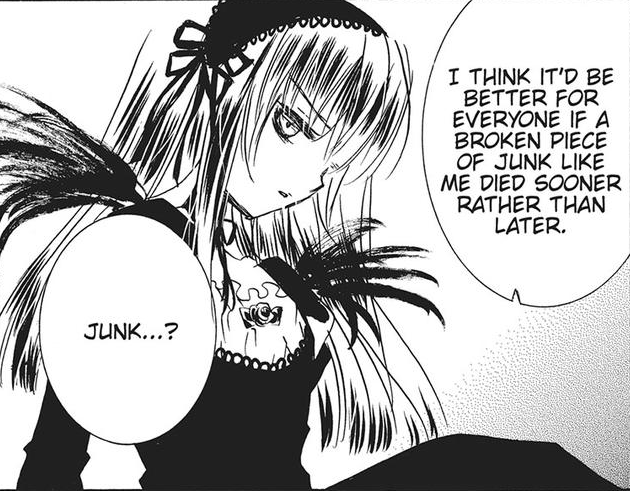
In this conversation with Megu, Suigintou picks up on the fact that Megu sees herself as junk, worthless, discardable, etc, in the same way Suigintou is sensitive about. Shinku struck a nerve when she called Suigintou "junk" in prior chapters. If we tie Suigintou's sense of her own inferiority or worthlessness into the intimate abuse interpretation, then it's easy to see the both of them as possessing fundamentally wounded or broken bodies. Suigintou feels intrinsically that she is at a deficit and must kill and consume her sisters' hearts in order to become lovable. Megu and she share many of the same complexes in this regard, but Megu is her masochistic reflection: she contains many or all of the vulnerable elements of Suigintou's personality (especially insofar as readings of intimate abuse are concerned) with none of Suigintou's defense mechanisms. Suigintou sees the weakest and most fragile parts of herself in Megu and her intrinsic desire to care for and love this reflection is the beginning of her becoming less repressed and more capable of loving herself. I find the fact that she had to kill Megu particularly sad in this reading
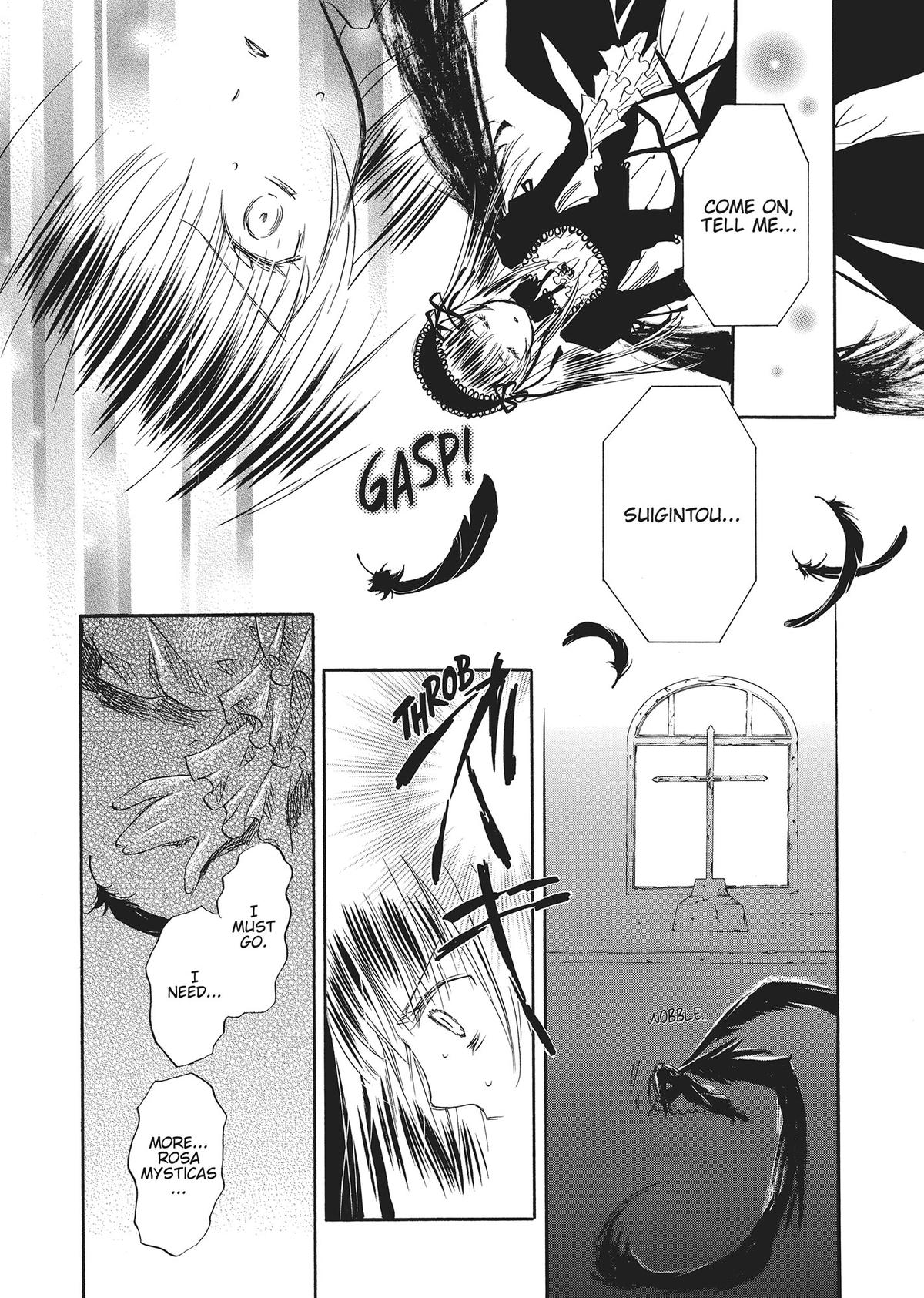
This panel is the most obviously emblematic of a "traumatized" individual, or the most acute and obvious signs of trauma: the throbbing heart, and the waking into a sense of threat, and her first instinct for grounding herself is the desire to assert herself and defend her existence from insufficiency and inferiority (-> abandonment) by way of violence and consumption. I think it's a very endearing panel, the waking into frightfulness is very sensible for someone who has been abused and abandoned in that way.
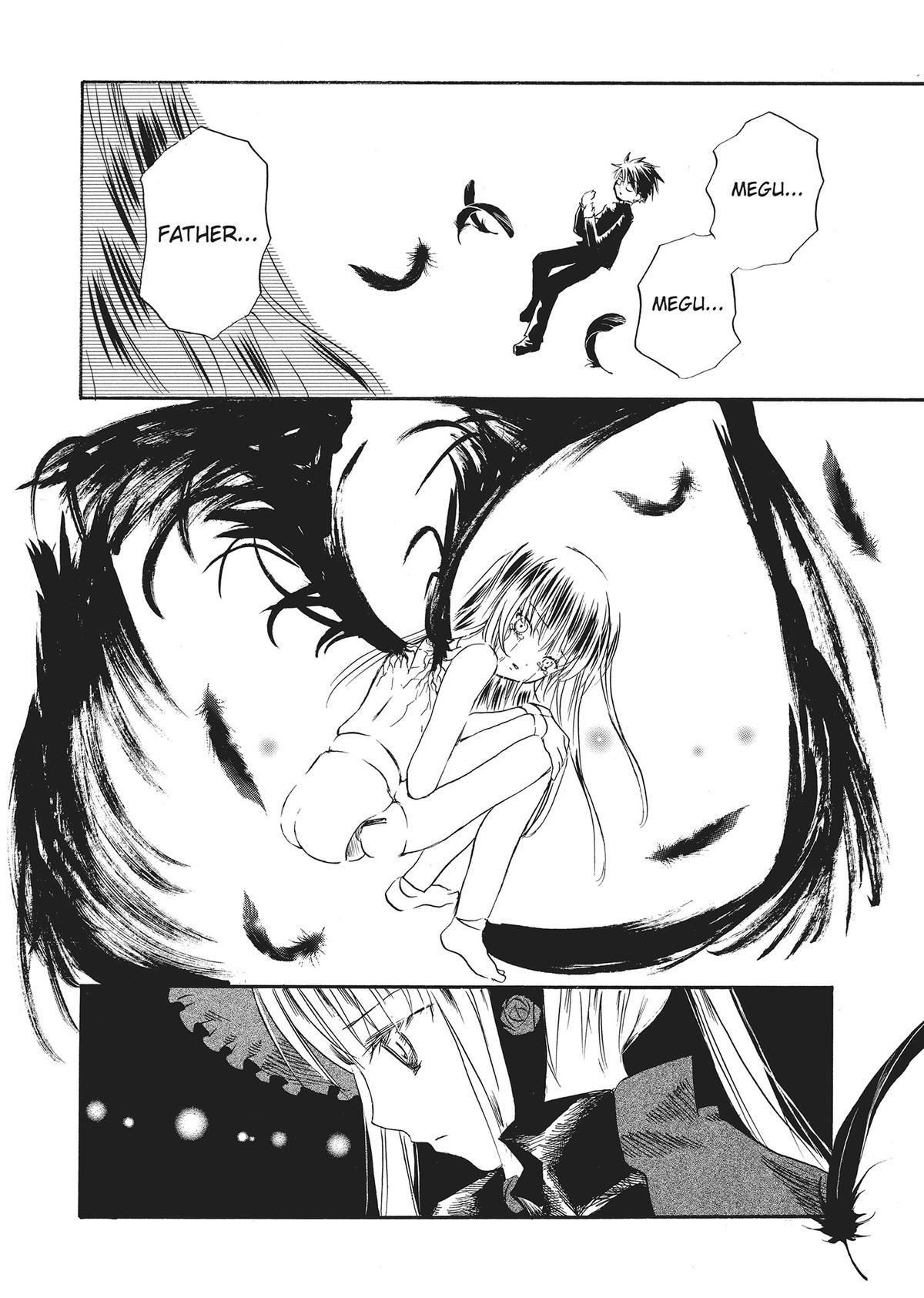
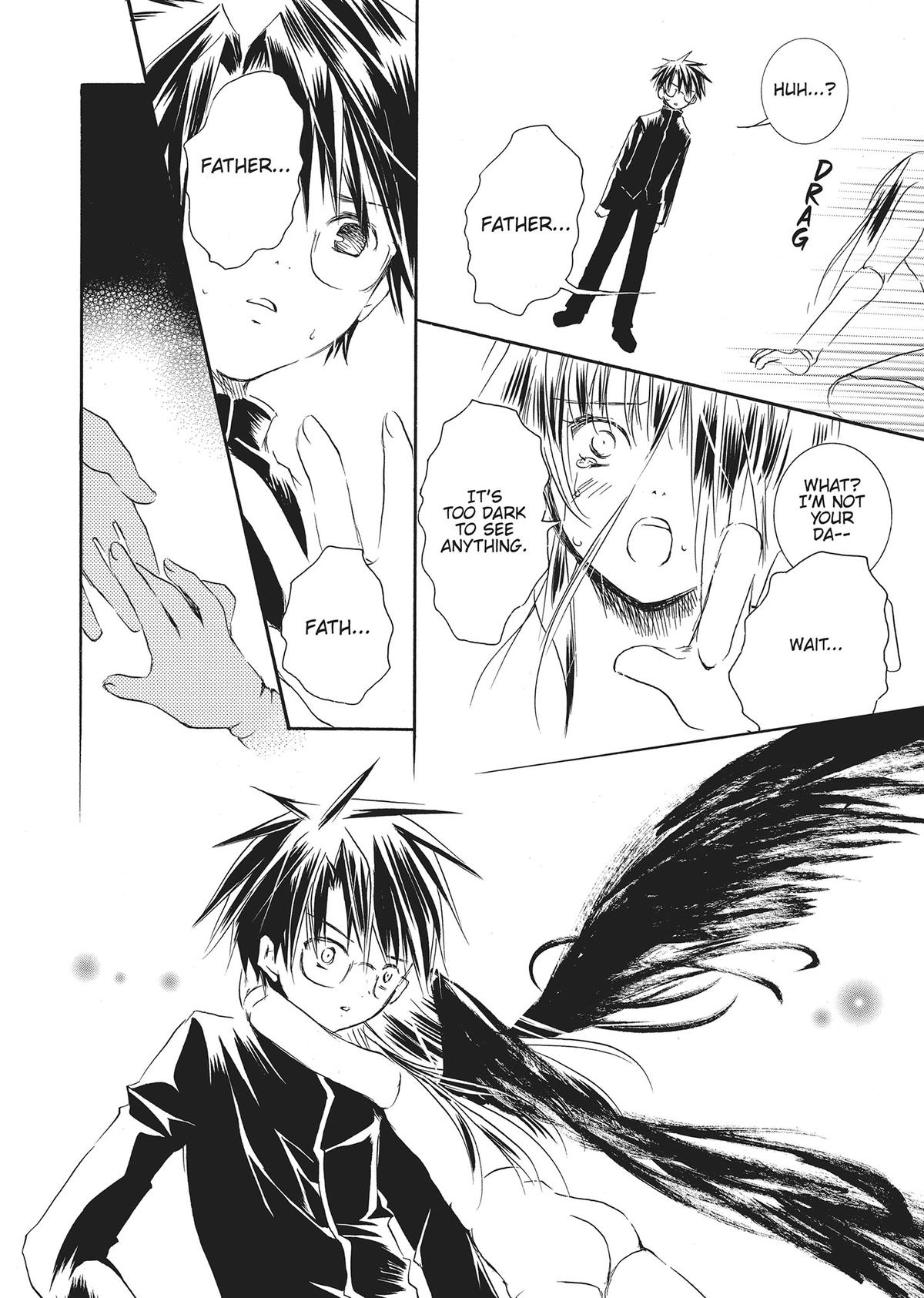
She finds her body disgusting, especially after forceful absorption of another. The vampiric lifestyle she has been inundated with leaves her feeling dirty, degraded and even worse about her body and herself. I think it is very, very important that she is not depicted as attractive or elegant. She is depicted more like a classical western doll, with all of the uncanny shapes involved, her wings looking genuinely out of place on her body, she's long and spindly, a mark of her superior age to that of the other dolls. Is aging not a traumatic thing for an abandoned and abused child? The door is finally shut for good, and all of the innocence you were promised and never received is revoked even in potential. I think it is very important because it reflects the way she feels. She is not some perfect elegant creature in every situation, pristine and ideal, who simply happens to be confused about her appearance or have unrealistic concerns about her wings and body. Her wings genuinely do seem to be a difficulty for her body. Still, I don't think or mean to say she's ugly. I just mean that I felt the depiction was not afraid to have her be less than some perfect angel. Her desparation for her father is palpable and sad. The abandonment she has been subjected to hits harder for me always because of her age. There is something particularly cruel about the transition from child to adult for a victim. For a healthy individual, it is a time of growing agency and respect. For a victim, it's just the conclusion of their neglect as they're promoted to an "adult," someone society will not feign the slightest interest in caring for, aiding, or supporting. Now they are out on their own, now they are subject to cruel and ugly gazes, subject to mockery and laughter from the great theatrical audience mass society constitutes. My paranoid or persecutory thinking is probably showing.
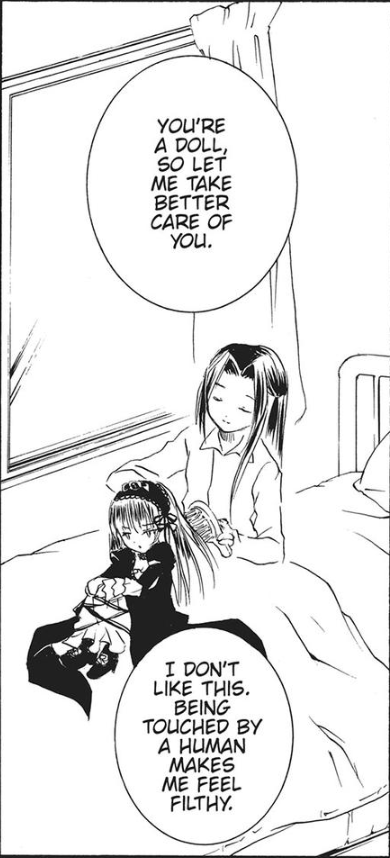
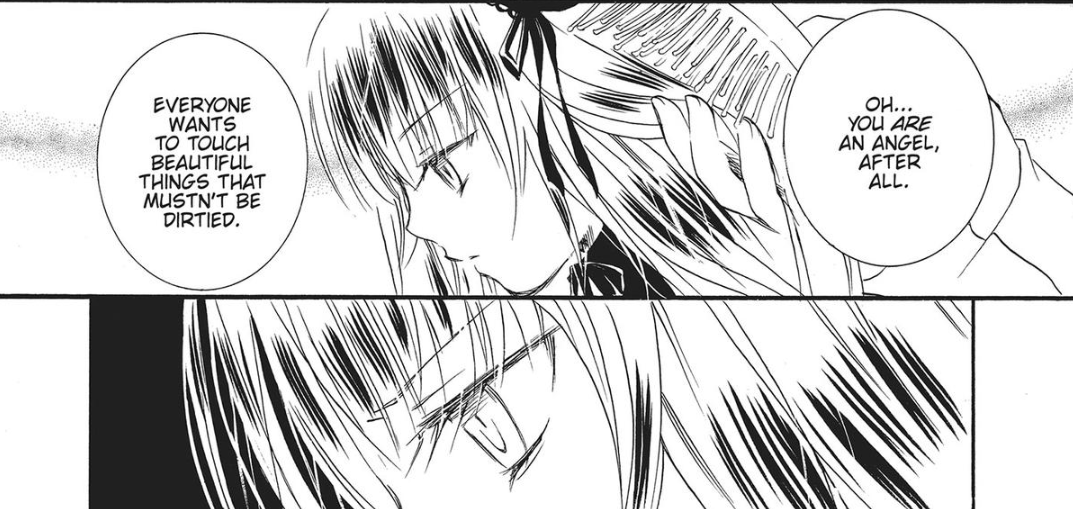
I think the assault and exploitation themes are particularly vivid here. Suigintou doesn't like being touched by humans. It makes her feel dirty. Megu claims everyone wants to touch beautiful things like angels which shouldn't be dirtied. Megu affirms in more or less every way Suigintou's vampiric, molested model of human relations. She affirms that she should feel dirty, that people should want to touch her anyway, and she wants actively to be "used up" by Suigintou.
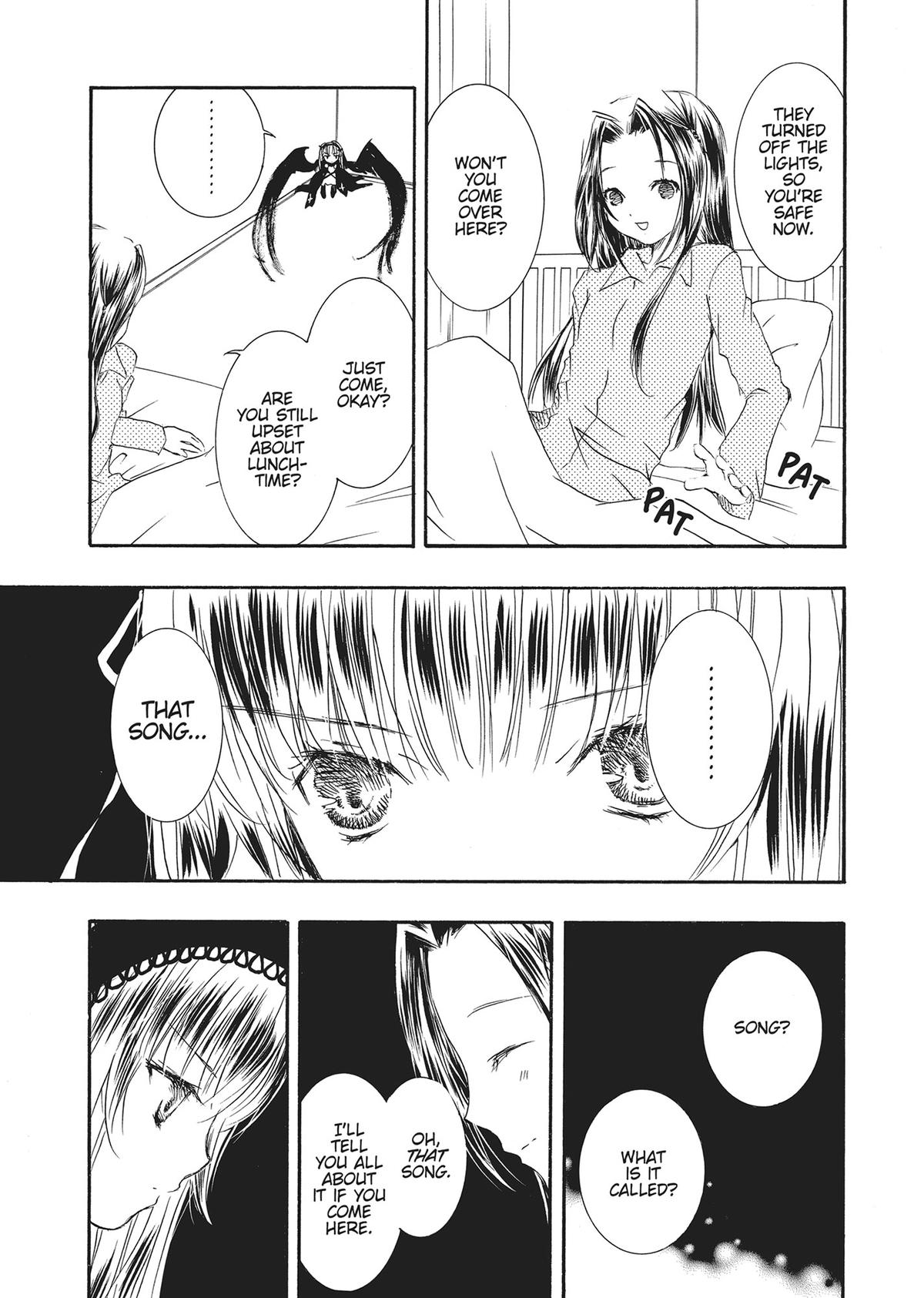
I like noting here that Suigintou is nocturnal, avoids the daylight, and mostly lives in the dark hours of the night. I had a similar experience partly because, I feel, CSA and intense abuse tends to make a child quite avoidant towards adults and feel considerably more alive and free when they are alone and know adults won't be nearby.
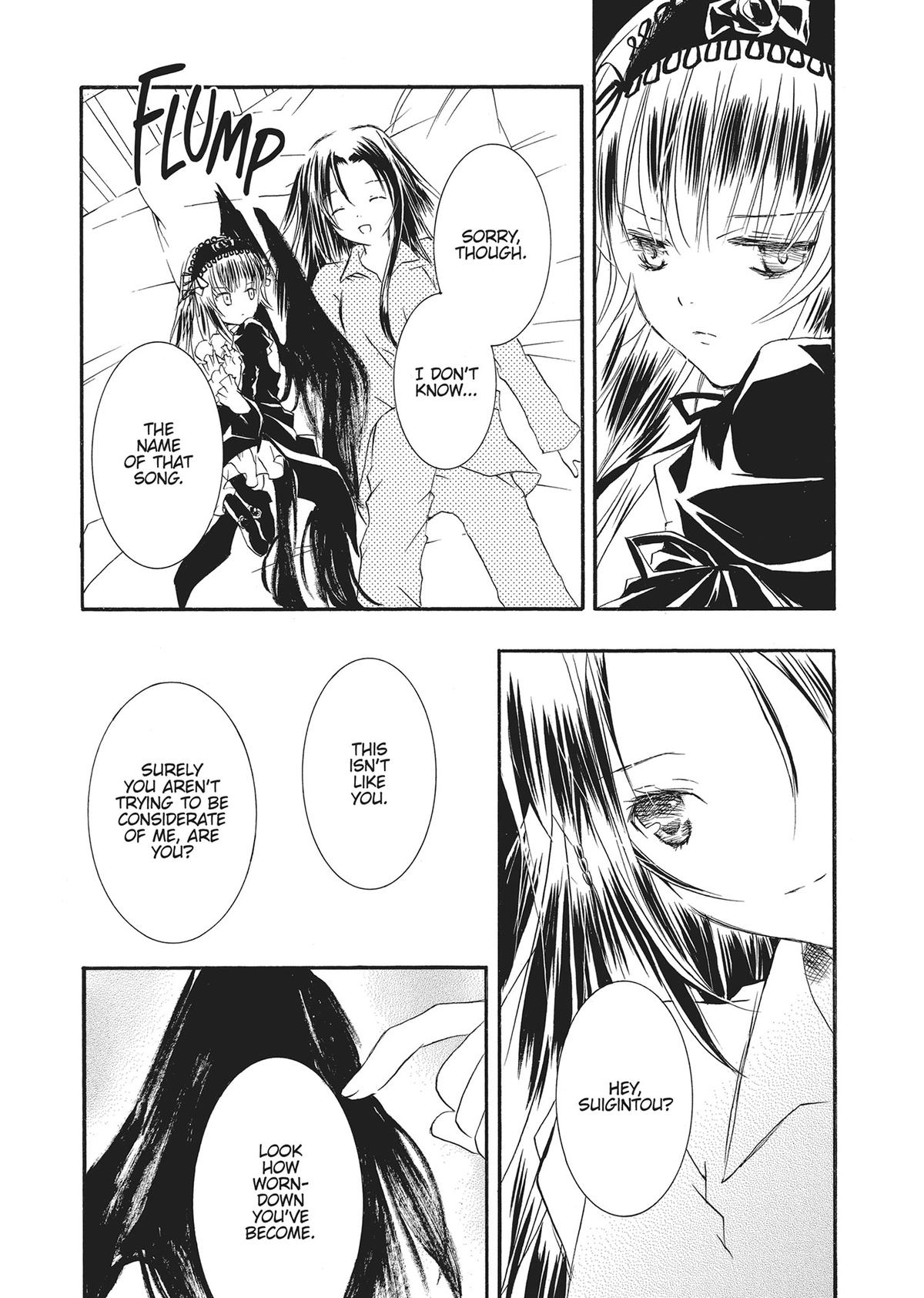
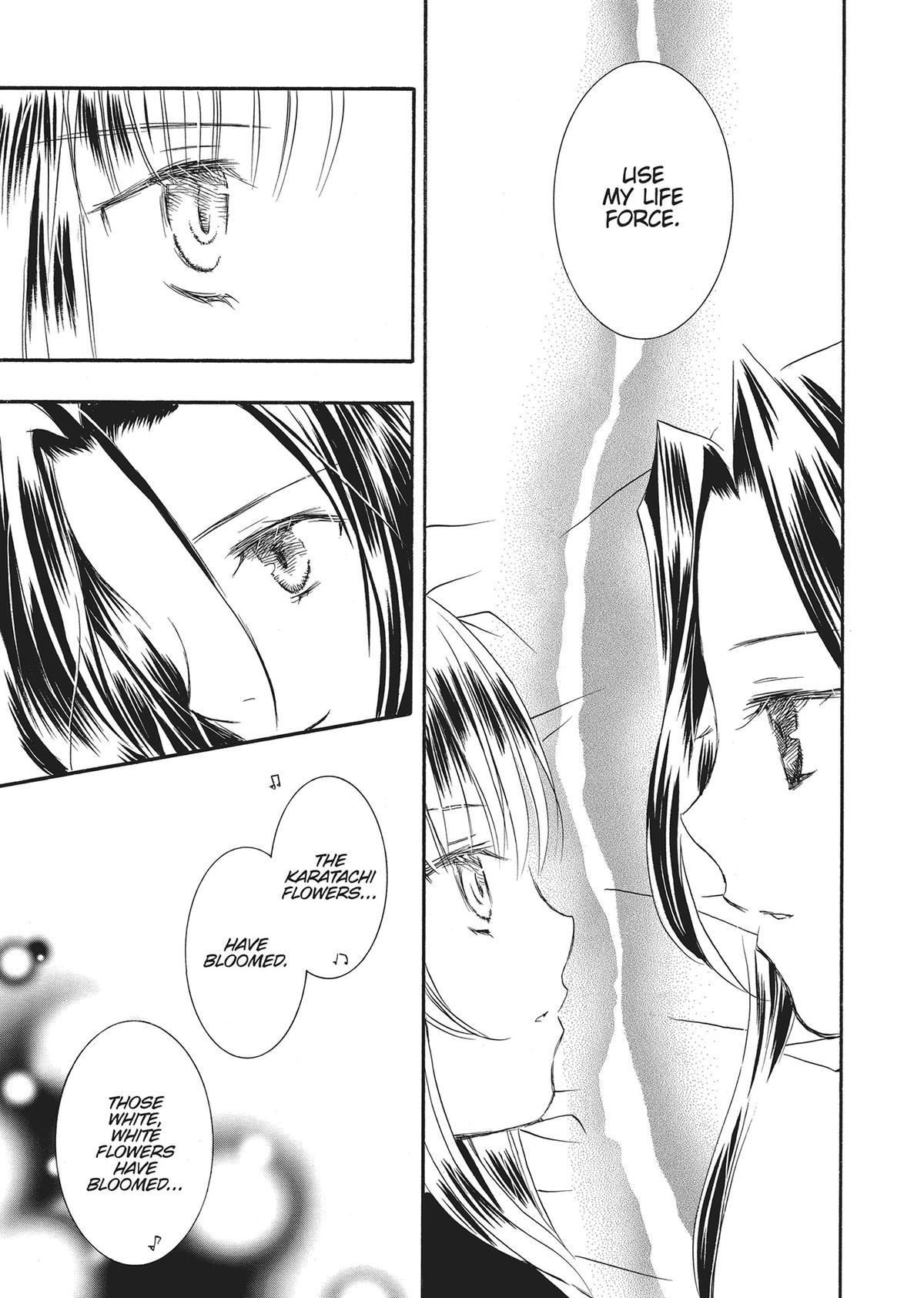
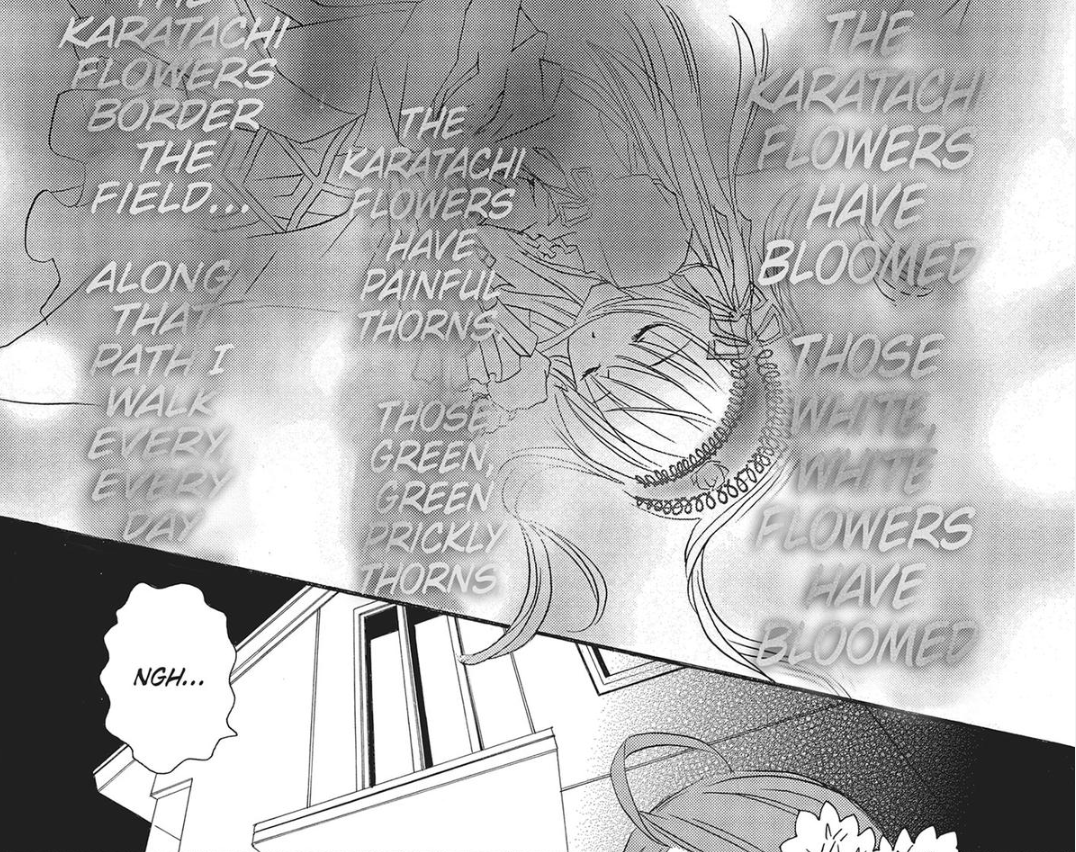
The song was given to Megu by her grandmother, whose wrinkled hands frightened her when she clasped them. Megu has a "damaged" body and was afraid of touch as well, finding it dirty, and the song she was given speaks of white (pure) flowers blooming with thorns. Suigintou is the white flower, pure and angelic, blooming with a vampiric cost, her thorns manifesting as her consumptive need to take and perhaps even kill. But in another sense, all contact for these two is modeled like the song. Someone will be the blooming flower, someone will pay a price, something must bleed. I find the final panel, with the implication of Suigintou "feeding" particularly compelling. It's easy to read as a sexual metaphor. I feel very sentimental about everything. I am probably depressed but more than that I am a sickly romantic. I like to imagine being cut and wounded. I'd love to be given a big boquet of roses or other flowers, I love the pretty red of roses I admit but I love white lily as well and many other flowers I want to learn more about, I love yellow flowers too for their symbolism. Yellow is a beautiful color and yellow flowers carry many meanings like envy, jealousy, or cowardice. I don't know, I just would love to smell nice flowers while bleeding. I would love to bleed on someone. I love bleeding a lot and feeling the warm blood feeling, I love the smell and taste, I love getting my blood everywhere, I really would adore that kind of thing. I didn't know people found it so disgusting. I want to be taken care of, as always... I am so defunct. I really would like to be safe. I wish I didn't feel as afraid as I do constantly. I wish I could live out my fantasies happily more easily